Field note
From signal to decision: what makes intelligence useful
· Silex Strategic Group · 3 minute read
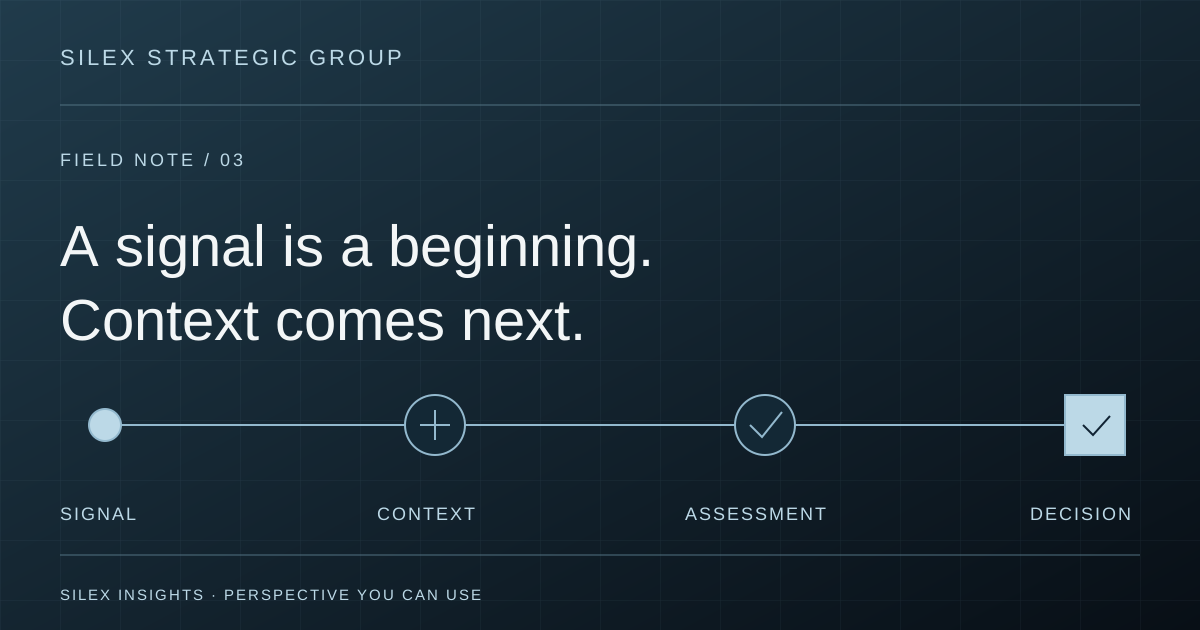
A headline can tell you something happened. It rarely tells you, on its own, what that development means for your organization. Useful intelligence makes that connection explicit.
At Silex, the starting question is practical: what does the reader need to decide, and by when? Signal, context, assessment, and decision are four parts of a reasoning process. Each should be visible enough for someone else to examine.
Signal: establish what changed
A signal might be a public notice, an observation, or a reported development. Capture its origin, publication time, and the period it describes. Ask whether it is a direct account, a forecast, or an interpretation. Multiple reports repeating one source do not necessarily provide independent confirmation.
Keep the initial statement narrow. Describe what the source establishes before attaching a meaning to it.
Context: connect it to the operation
The same development can matter differently to different organizations. Identify the people, places, timing, and dependencies relevant to the question. A transport update matters to a planned visit only if it intersects with the visit's access requirements and decision window.
That connection keeps the assessment focused. It also makes clear why an apparently significant headline might have little bearing on a particular decision.
Assessment: explain the implication
Set out what could follow from the information, why you judge that outcome plausible, and what might lead to a different interpretation. Distinguish a confirmed condition from a possible consequence. Name the information gaps that could change the conclusion.
Confidence and urgency answer different questions. A short deadline does not strengthen weak evidence. If information is incomplete, explain the limitation alongside the assessment.
Decision: define the next useful step
An assessment should support a choice, a further question, or a deliberate decision to keep watching. Identify the options that need consideration, who owns the decision, and when new information will be reviewed. A review trigger can be a time, a verified change, or a dependency becoming unavailable.
This is an editorial explanation of a method, not a live assessment or a promise of continuous monitoring. Scope, sources, and update arrangements depend on the engagement.
See a clearly labeled fictional brief →
Discuss your intelligence question